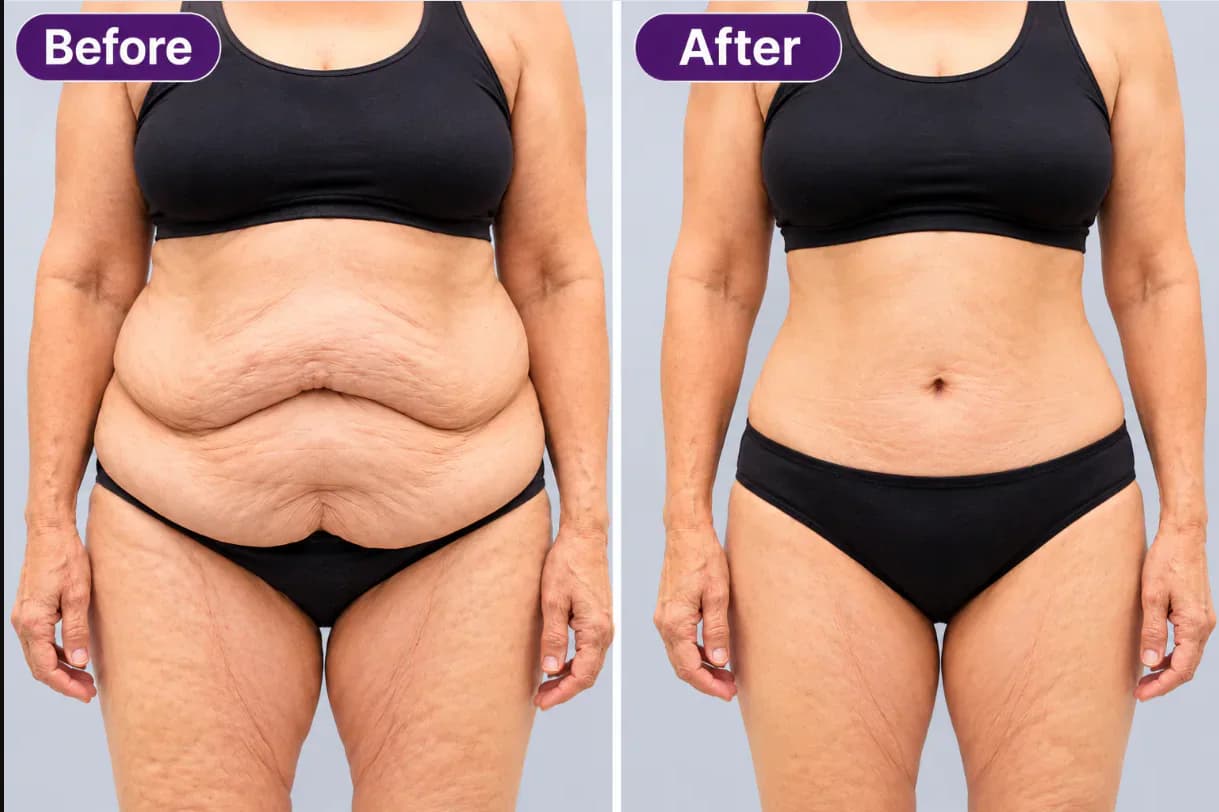
Are you struggling with stubborn body fat around your abdomen, thighs, waist, arms, or back despite maintaining a healthy diet and exercising regularly? Fat freezing treatment is a non-surgical body contouring option designed to reduce selected areas of localised fat without traditional surgery.
Also known as cryolipolysis treatment, fat freezing uses controlled cooling to target certain fat cells beneath the skin. Over time, the treated fat cells are naturally processed and eliminated by the body.
Unlike surgical liposuction, this approach does not involve traditional surgical incisions or general anaesthesia. It may be suitable for individuals who are close to their desired body weight but want to address specific stubborn fat deposits.
Today, people exploring non-surgical fat reduction, fat reduction without surgery, and non-invasive body sculpting are increasingly interested in understanding how fat freezing works, what results to expect, and whether it is the right treatment for their body concerns.
In this guide, we explain everything about fat freezing treatment, including its procedure, benefits, treatment areas, recovery, possible side effects, alternative treatments, and frequently asked questions.
What Is Fat Freezing Treatment?
Fat freezing treatment is a non-surgical body contouring procedure that uses controlled cooling to target localised subcutaneous fat.
The medical term for this technique is cryolipolysis.
During treatment, a specialised applicator is positioned over the selected body area. It delivers controlled cooling to the underlying fatty tissue while protecting the surrounding skin through the device's safety mechanisms.
The cooling process damages susceptible fat cells, which are gradually processed and eliminated by the body's natural metabolic processes.
The objective is to reduce the thickness of localised fat deposits and improve the contour of selected body areas.
Important: Fat freezing is a body contouring treatment, not an obesity treatment or a substitute for weight management. It does not reliably reduce overall body weight or treat visceral fat surrounding internal organs.
What Is Cryolipolysis Treatment and How Does It Work?
Cryolipolysis treatment is a technology-based method of non-surgical fat reduction that uses controlled cooling to target fat cells.
Fat cells are more sensitive to cold exposure than many surrounding tissues. Carefully controlled cooling can therefore cause damage to targeted fat cells without intentionally destroying surrounding structures.
How Does the Fat Freezing Process Work?
The treatment generally involves the following stages:
Consultation: The specialist examines the treatment area and determines whether cryolipolysis is appropriate.
Treatment preparation: The selected area is marked, and a protective gel pad or membrane may be applied according to the device instructions.
Applicator placement: A suitable applicator is positioned over the targeted fat deposit.
Controlled cooling: The device delivers controlled cooling for a specified period.
Post-treatment care: The applicator is removed, and the area may be gently massaged if recommended by the device protocol.
Natural fat elimination: The body gradually processes the affected fat cells over the following weeks and months.
The exact temperature, duration, and applicator settings depend on the specific approved device and treatment area.
Which Body Areas Can Be Treated with Fat Freezing?
Fat freezing is generally used to target selected areas of stubborn subcutaneous fat.
Common treatment areas include:
1. Abdomen
Fat freezing may help reduce localised fat deposits around the upper and lower abdomen in suitable candidates.
2. Flanks or Love Handles
The flanks are the areas around the sides of the waist. Cryolipolysis may help improve the appearance of stubborn fat deposits in this region.
3. Thighs
Selected inner and outer thigh fat deposits may be treated to improve body contours.
4. Upper Arms
Fat freezing may be considered for localised fat around the upper arms when the area and tissue are suitable for the applicator.
5. Back Fat
Certain back areas, including fat deposits around the bra line, may be suitable for treatment.
6. Submental Fat
Selected devices are designed to treat fat beneath the chin. Treatment suitability depends on the device's approved indications and the individual's anatomy.
Not every body area is suitable for cryolipolysis. A qualified professional should assess skin condition, fat distribution, and the possibility of alternative treatments.
Benefits of Non-Surgical Fat Reduction
One of the main reasons people consider non-surgical fat reduction is the possibility of addressing stubborn fat without undergoing traditional fat-removal surgery.
Potential advantages include:
No traditional surgical incisions.
No surgical removal of fat through liposuction.
Targeted treatment of selected fat deposits.
Generally minimal interruption to daily activities.
No general anaesthesia for standard cryolipolysis sessions.
Gradual changes in treated body contours.
Personalised treatment planning.
No conventional surgical recovery period.
However, non-surgical does not mean risk-free. Patients should understand the limitations, device-specific risks, and expected outcomes before treatment.
Fat Reduction Without Surgery: Is It Effective?
Fat reduction without surgery can be an option for individuals who have localised fat deposits and do not want to undergo a surgical procedure.
However, the effectiveness depends on the technology, treatment area, patient's anatomy, and individual response.
Fat freezing is designed for localised fat reduction rather than significant weight loss.
It is generally more appropriate for people who:
Are near their target body weight.
Have stubborn pockets of subcutaneous fat.
Maintain relatively stable body weight.
Have realistic expectations.
Prefer non-surgical body contouring.
Do not have medical contraindications to the selected treatment.
People with obesity, substantial excess skin, or abdominal fat related to internal visceral deposits may require a different treatment approach.
Fat Freezing vs Fat Dissolving Injections
Fat dissolving injections are another non-surgical approach used to address selected localised fat deposits.
These injections use substances that damage fat cells in the treated area. The active ingredient, approved treatment area, number of sessions, and safety profile vary depending on the product.
Fat freezing and injectable fat reduction are not interchangeable treatments.
Factor | Fat Freezing | Fat Dissolving Injections |
Treatment method | Controlled cooling | Injectable fat-damaging substance |
Technology | Cryolipolysis device | Injectable formulation |
Common application | Selected body fat deposits | Specific approved localised fat areas |
Treatment approach | External applicator | Multiple injections |
Recovery | Temporary redness, numbness or swelling may occur | Swelling, tenderness and bruising may occur |
Results | Gradual | Gradual |
Suitability | Depends on fat distribution and device indications | Depends on product approval and treatment area |
The US FDA has approved deoxycholic acid injections for improving the appearance of moderate-to-severe submental fat in adults. This approval should not be assumed to apply to every injectable fat-dissolving product or body area.
Always verify the regulatory approval and credentials of the professional administering injections.
Ultrasound Fat Reduction: Another Non-Surgical Option
Ultrasound fat reduction uses ultrasound energy to target selected tissues beneath the skin.
Depending on the technology, ultrasound-based treatments may use focused energy to affect fat tissue or help improve body contours.
Some devices are designed to produce controlled thermal or mechanical effects in targeted areas.
Potential applications may include:
Abdomen.
Waist.
Flanks.
Thighs.
Other device-approved treatment areas.
Fat Freezing vs Ultrasound Fat Reduction
The two procedures use different technologies.
Feature | Cryolipolysis | Ultrasound Fat Reduction |
Energy source | Controlled cooling | Ultrasound energy |
Main mechanism | Cold-induced fat cell damage | Device-specific ultrasound effects |
Treatment | Applicator-based cooling | Ultrasound applicator |
Results | Develop gradually | Depend on technology and treatment protocol |
Suitability | Selected localised fat deposits | Depends on the device and patient |
The best option depends on your body composition, medical history, treatment area, and the technology available.
Non-Invasive Body Sculpting: How Is It Different from Weight Loss?
Non-invasive body sculpting refers to treatments designed to improve the shape or contour of selected body areas without conventional surgery.
Examples include:
Cryolipolysis.
Selected ultrasound-based body contouring.
Radiofrequency-based body treatments.
Certain electromagnetic muscle-stimulation technologies.
These procedures have different mechanisms and clinical evidence.
Body sculpting is not equivalent to weight loss. A person may notice changes in a treated area's contour without a substantial reduction in total body weight.
A healthy diet, regular physical activity, and appropriate medical care remain important for maintaining overall health.
Body Contouring Without Surgery: Who Is the Right Candidate?
Body contouring without surgery may be suitable for adults who want to improve selected areas of localised fat without undergoing an operation.
You may be considered for treatment if:
Your weight is relatively stable.
You have clearly identifiable localised fat deposits.
You have realistic expectations.
You do not have significant excess skin requiring surgery.
You are medically suitable for the chosen device.
You understand the possible side effects.
Who Should Avoid Fat Freezing?
Cryolipolysis is not appropriate for everyone.
People with cold-related disorders, including cryoglobulinaemia, cold agglutinin disease, and paroxysmal cold haemoglobinuria, should not undergo cryolipolysis.
Other concerns requiring careful medical evaluation include:
Poor circulation in the treatment area.
Existing hernias near the treatment site.
Significant skin conditions.
Recent surgery in the target area.
Certain nerve-related conditions.
Pregnancy or breastfeeding, when treatment should generally be deferred.
Significant abdominal wall weakness.
A qualified medical professional should review the full medical history and device-specific contraindications before treatment.
Fat Freezing Treatment Procedure: Step-by-Step
Understanding the treatment process helps patients know what to expect during a session.
Step 1: Initial Consultation
The specialist evaluates your body composition, treatment goals, medical history, and the area of concern.
The consultation helps determine whether fat freezing is appropriate or whether another treatment would be more suitable.
Step 2: Treatment Area Assessment
The selected body area is examined to assess the amount and distribution of subcutaneous fat.
The specialist determines whether the area can be safely treated with an appropriate applicator.
Step 3: Skin Preparation
The treatment area is cleaned and prepared. A protective gel pad or membrane may be applied as specified by the device manufacturer.
Step 4: Applicator Placement
The applicator is positioned over the selected area to deliver controlled cooling.
Patients may initially experience pulling, pressure, cold sensations, or temporary discomfort.
Step 5: Controlled Cooling Session
The device maintains the prescribed cooling settings for the required duration.
Treatment duration varies according to the device, applicator, and treatment area.
Step 6: Post-Treatment Assessment
After removing the applicator, the specialist checks the treated area and provides appropriate aftercare instructions.
Step 7: Follow-Up
The patient may be advised to return for assessment after several weeks to evaluate the results and determine whether additional treatment is appropriate.
How Long Does Fat Freezing Treatment Take?
Treatment time varies depending on the device and body area.
A typical treatment cycle may last approximately 35–75 minutes, although some technologies and treatment protocols differ.
Some patients may need more than one treatment cycle to address their desired areas.
Your specialist should explain the recommended treatment schedule before starting.
When Will You See Fat Freezing Results?
Fat freezing does not produce immediate results.
After treatment, the body gradually processes the affected fat cells. Visible changes may develop over several weeks, with results often becoming more apparent around two to three months.
The outcome varies according to:
Amount of localised fat.
Treatment area.
Device technology.
Number of treatment cycles.
Individual biological response.
Changes in body weight.
Fat freezing is intended to reduce selected fat deposits, not produce dramatic weight loss or guarantee a specific body shape.
Possible Side Effects and Risks of Fat Freezing
Although cryolipolysis is non-surgical, it can cause temporary and, occasionally, serious adverse effects.
Common temporary side effects include:
Redness.
Swelling.
Bruising.
Tenderness.
Tingling.
Numbness.
Temporary skin sensitivity.
What Is Paradoxical Adipose Hyperplasia?
Paradoxical adipose hyperplasia (PAH) is an uncommon but important complication associated with cryolipolysis.
Instead of shrinking, the treated fat tissue becomes larger and firmer after treatment, creating a noticeable bulge in the treated area.
PAH may appear weeks or months after treatment and generally does not resolve on its own. Surgical treatment may be required.
Other possible risks include cold-related tissue injury, changes in skin sensation, and prolonged discomfort.
Patients should discuss these risks and the device's safety information before proceeding.
How Long Do Fat Freezing Results Last?
Fat cells affected by cryolipolysis are gradually removed from the treated area.
The reduction in treated fat cells can be long-lasting. However, remaining fat cells can increase in size if a person gains weight.
For this reason, maintaining a stable weight, following a balanced diet, and exercising regularly can help maintain body contours.
Fat freezing does not prevent future weight gain.
Non-Surgical Cosmetic Treatments: Which Option Is Best?
There are several non-surgical cosmetic treatments available for individuals interested in improving body contours or addressing specific aesthetic concerns.
The appropriate procedure depends on the concern being treated.
Treatment | Main Purpose |
Fat freezing | Localised fat reduction |
Fat dissolving injections | Treatment of specific approved fat deposits |
Ultrasound fat reduction | Device-based body contouring |
Radiofrequency treatments | Selected skin tightening and contouring applications |
Laser-based treatments | Technology-specific skin or body contouring applications |
A specialist should explain the evidence, expected benefits, limitations, and risks of each option.
Non-Surgical Doctors and Specialists: Who Should Perform Fat Freezing?
When searching for non surgical doctors, patients should prioritise qualified medical professionals with relevant training in aesthetic medicine and body contouring.
Before choosing a treatment provider, check:
Recognised medical qualifications.
Training in the selected technology.
Experience treating the relevant body area.
Device authenticity and regulatory status.
Medical screening and contraindication assessment.
Emergency and complication management protocols.
Clear aftercare and follow-up arrangements.
A provider should never promise guaranteed fat loss or pressure patients into purchasing multiple sessions.
Understanding Other Non-Surgical Medical Procedures
The phrase non surgical medical procedures covers many different treatments across healthcare. Not all of these procedures are related to fat reduction or cosmetic body contouring.
For example:
Non Surgical Therapy
Non surgical therapy includes medical approaches that manage health conditions without traditional operations. Examples include physiotherapy, medication, and certain device-based treatments.
Non Surgical Heart Treatment
Some cardiovascular conditions can be treated using catheter-based interventions, medications, and other minimally invasive approaches.
These treatments are selected by cardiologists based on the patient's diagnosis.
Non Surgical Orthopedic Treatment
Orthopedic conditions may be managed through physiotherapy, medications, injections, rehabilitation, and selected minimally invasive procedures.
Non Surgical Plastic Surgery
The term is commonly used to describe non-operative aesthetic procedures such as certain injectables, skin treatments, and device-based cosmetic treatments.
These are different from traditional plastic surgery operations.
The term non cosmetic surgery is also broad and may refer to medical or reconstructive procedures that are not primarily intended to improve appearance. It is not a recognised synonym for fat freezing.
Patients should select treatments according to their actual medical or cosmetic concern rather than relying on broad online terminology.
Frequently Asked Questions About Fat Freezing Treatment
1. What is fat freezing treatment?
Fat freezing is a non-surgical body contouring procedure that uses controlled cooling to target selected subcutaneous fat deposits. It is also known as cryolipolysis.
2. Is cryolipolysis treatment safe?
Cryolipolysis is a non-surgical procedure with known benefits and risks. Temporary swelling, bruising, numbness, and tenderness can occur. Rare complications such as paradoxical adipose hyperplasia are also possible.
3. Can fat freezing reduce belly fat?
Fat freezing may reduce selected subcutaneous fat deposits around the abdomen. It does not target visceral fat surrounding internal organs and is not an obesity treatment.
4. How many fat freezing sessions are required?
The number of sessions depends on the treatment area, fat distribution, device, and desired outcome. Some areas may require more than one treatment cycle.
5. Is fat freezing better than fat dissolving injections?
Neither treatment is universally better. Cryolipolysis uses controlled cooling, while fat dissolving injections use specific injectable substances. Their indications, approved treatment areas, and risks are different.
6. What is the difference between cryolipolysis and ultrasound fat reduction?
Cryolipolysis uses controlled cooling to damage selected fat cells, whereas ultrasound fat reduction uses ultrasound energy. Both are device-dependent approaches with different treatment protocols.
7. Does fat freezing help with weight loss?
Fat freezing is designed for localised fat reduction and body contouring, not significant weight loss. It should not replace medical obesity treatment.
8. How long does it take to see fat freezing results?
Visible changes generally develop gradually over several weeks. Results are often assessed around two to three months after treatment.
9. Does fat freezing permanently remove fat cells?
The affected fat cells are gradually eliminated, and the reduction can be long-lasting. However, remaining fat cells can enlarge with weight gain.
10. Is fat freezing painful?
Patients may initially experience intense cold, pulling, or pressure. Temporary numbness, tenderness, or discomfort may continue after treatment.
11. Who should avoid cryolipolysis?
People with certain cold-related medical conditions, including cryoglobulinaemia and cold agglutinin disease, should avoid cryolipolysis. Other contraindications require medical assessment.
12. Can fat freezing tighten loose skin?
Fat freezing is primarily designed to target localised fat, not significant skin laxity. People with loose skin may require a different treatment approach.
13. Is non-invasive body sculpting suitable for everyone?
No. Suitability depends on medical history, body composition, treatment area, device indications, and individual expectations.
14. Can fat freezing replace liposuction?
No. Fat freezing and liposuction are different treatments. Liposuction surgically removes fat, whereas cryolipolysis gradually reduces selected fat deposits without conventional surgery.
15. Are non-surgical cosmetic treatments permanent?
Results vary by procedure. Some treatments provide longer-lasting changes, while others require maintenance sessions. A specialist should explain realistic expectations.
Book Your Fat Freezing Treatment Consultation
If stubborn fat deposits around your abdomen, waist, thighs, arms, or other body areas are affecting your confidence, a professional consultation can help you explore suitable treatment options.
At youngnesscenter, patients can discuss their body contouring concerns and understand whether fat freezing, cryolipolysis, or another non-surgical treatment is appropriate following a medical assessment.
Whether you are researching fat freezing treatment, non-surgical fat reduction, ultrasound fat reduction, or body contouring without surgery, choosing the right treatment begins with understanding your body and individual goals.
Book your consultation today to explore personalised fat reduction options and learn more about non-invasive body sculpting.
Your treatment plan should always prioritise safety, realistic expectations, and medically appropriate care.