Breast reduction surgery in India is an increasingly considered procedure for women experiencing physical discomfort, lifestyle limitations, or self-consciousness due to excessively large breasts. Medically known as reduction mammoplasty, this surgical procedure removes excess breast fat, glandular tissue, and skin to create smaller, lighter, and more proportionate breasts.
Women with disproportionately large breasts may experience persistent back pain, neck pain, shoulder discomfort, skin irritation, and difficulty participating in physical activities. Breast reduction surgery aims to address these concerns while improving breast shape and overall body proportions.
With advancements in plastic and reconstructive surgery, breast reduction procedures can be customised according to individual anatomy, health conditions, and desired outcomes. Whether you are researching breast reduction surgery in India, exploring breast reduction surgery in Delhi, or comparing treatment costs, understanding the procedure can help you make an informed decision.
Quick Answer: What Is Breast Reduction Surgery?
Breast reduction surgery is a surgical procedure that reduces breast size by removing excess fat, glandular tissue, and skin. It also reshapes the breasts and may reposition the nipples to achieve a more balanced appearance.
The procedure is generally performed under general anaesthesia by a qualified plastic surgeon. Recovery commonly takes around 2–6 weeks, although complete healing and final breast shape can take longer.
Quick Facts About Breast Reduction Surgery
Medical name: Reduction Mammoplasty
Procedure type: Surgical
Main purpose: Reduce breast size and weight
Anaesthesia: Usually general anaesthesia
Procedure duration: Commonly around 2–3 hours
Recovery period: Approximately 2–6 weeks for initial recovery
Results: Long-lasting, subject to ageing and weight changes
Scarring: Permanent surgical scars that generally fade over time
Individual treatment plans, surgical duration, and recovery vary according to the patient's medical condition and the extent of reduction.
What Is Breast Reduction Surgery?
Breast reduction surgery, also known as reduction mammoplasty, is a surgical procedure designed to remove excess breast tissue, fat, and skin. The remaining tissue is reshaped to create smaller, lighter, and more proportionate breasts.
The procedure is not exclusively cosmetic. Many women consider breast reduction because excessively large breasts can cause physical discomfort and interfere with everyday activities.
For example, women with very large breasts may experience difficulty exercising, discomfort while sleeping, shoulder grooves from bra straps, and repeated skin irritation beneath the breasts.
During surgery, the surgeon carefully removes the required amount of tissue while considering breast shape, nipple position, symmetry, and the patient's desired outcome.
The main objectives of breast reduction surgery include:
Reducing excessive breast volume and weight.
Improving breast proportions.
Reducing discomfort associated with heavy breasts.
Improving breast shape and positioning.
Supporting greater comfort during daily activities.
Improving confidence and quality of life.
The final breast size and shape depend on individual anatomy, skin elasticity, tissue composition, and surgical planning.
Who Needs Breast Reduction Surgery?
Breast reduction surgery may be suitable for women whose breast size causes persistent physical discomfort or affects their daily routine.
Some women naturally develop larger breasts, while others experience breast enlargement due to hormonal changes, pregnancy, breastfeeding, or weight fluctuations.
You may consider consulting a qualified plastic surgeon if you experience:
1. Persistent Back and Neck Pain
Excessive breast weight can place additional strain on the neck, shoulders, and upper back. This may contribute to persistent discomfort and difficulty maintaining a comfortable posture.
2. Shoulder Pain and Bra Strap Grooves
Heavy breasts can place pressure on the shoulders, resulting in visible grooves and discomfort caused by bra straps.
3. Skin Irritation and Rashes
The skin underneath large breasts may experience repeated friction, moisture accumulation, irritation, and fungal infections.
4. Difficulty Exercising
Large breasts can make running, jumping, gym workouts, and other physical activities uncomfortable.
5. Disproportionate Breast Size
Some women feel their breast size is disproportionate to their body frame, making it difficult to find comfortable clothing and properly fitted bras.
6. Emotional and Lifestyle Concerns
Physical discomfort and unwanted attention associated with very large breasts may affect confidence, clothing choices, and social activities.
A medical consultation is necessary to determine whether breast reduction surgery is an appropriate treatment option.
Breast Reduction Surgery Procedure: Step-by-Step Guide
The breast reduction procedure involves several stages, starting with medical evaluation and ending with postoperative recovery.
Step 1: Initial Consultation
The first step is a consultation with a qualified plastic surgeon.
During this appointment, the surgeon evaluates breast size, shape, skin quality, nipple position, medical history, and individual expectations.
You may also discuss:
Desired breast size.
Existing physical discomfort.
Previous breast surgeries.
Pregnancy and breastfeeding plans.
Medical conditions and medications.
Expected scars and surgical outcomes.
Step 2: Pre-Surgical Assessment
Before surgery, the medical team may recommend blood investigations, breast imaging when appropriate, and other health assessments.
The surgeon and anaesthetist evaluate your fitness for surgery and explain the procedure, expected outcomes, and possible complications.
Step 3: Anaesthesia
Breast reduction surgery is generally performed under general anaesthesia, meaning the patient remains asleep throughout the operation.
Step 4: Surgical Incisions
The surgeon makes carefully planned incisions based on the amount of breast tissue and skin that needs to be removed.
Common incision patterns include:
Vertical or lollipop incision: An incision around the areola and vertically down towards the breast crease.
Inverted-T or anchor incision: An incision around the areola, vertically down the breast, and along the breast crease.
Step 5: Removal of Excess Breast Tissue
Excess breast fat, glandular tissue, and skin are removed according to the personalised surgical plan.
The surgeon reshapes the remaining breast tissue to create a balanced appearance.
Step 6: Nipple Repositioning
The nipple and areola are usually repositioned to a more suitable height while maintaining their connection to underlying tissue and blood supply whenever possible.
In selected extensive reductions, a different surgical approach may be necessary.
Step 7: Closing the Incisions
The incisions are closed with surgical sutures, and dressings or supportive garments are applied.
The patient is then monitored during the initial recovery period.
Types of Breast Reduction Surgery
The appropriate breast reduction technique depends on breast size, skin elasticity, tissue distribution, nipple position, and the amount of reduction required.
1. Vertical Breast Reduction
This technique uses incisions around the areola and vertically down towards the breast crease.
It may be suitable for selected patients requiring moderate breast reduction and reshaping.
2. Anchor Breast Reduction
The anchor technique involves incisions around the areola, vertically down the breast, and horizontally along the breast crease.
It is commonly considered when a larger reduction or significant skin removal is required.
3. Liposuction-Assisted Breast Reduction
In selected patients with suitable breast composition and skin elasticity, liposuction may be used to remove excess fatty tissue.
It does not provide the same degree of skin removal or reshaping as traditional breast reduction surgery.
The surgeon determines the appropriate technique after a detailed physical examination.
Breast Reduction Size Chart: How Small Can You Go?
A breast reduction size chart can help patients understand the relationship between their current breast size and their desired outcome.
However, there is no universal breast reduction size chart that guarantees a particular cup size after surgery.
Bra cup sizes differ between brands and manufacturers. Additionally, breast shape, chest measurements, tissue distribution, and body proportions influence the final appearance.
| Current Breast Size | Possible Surgical Goal |
|---|---|
| D Cup | Smaller, proportionate breasts |
| DD Cup | Reduced breast volume and weight |
| E Cup | More balanced breast proportions |
| F Cup | Significant breast volume reduction |
| G Cup | Individualised reduction based on anatomy |
| H Cup | Extensive reduction depending on medical suitability |
Important: This table is illustrative, not a medical conversion chart. Your surgeon will discuss a realistic breast size based on your anatomy, tissue availability, and health requirements.
Rather than focusing only on a specific cup size, surgical planning considers breast width, projection, skin quality, nipple position, and overall body proportions.
Benefits of Breast Reduction Surgery
Breast reduction surgery can provide both physical and aesthetic benefits for appropriately selected patients.
Some potential benefits include:
Reduced Back Pain: Reducing breast weight may help relieve discomfort associated with excessive breast volume.
Less Neck and Shoulder Discomfort: Lower breast weight may reduce pressure on the shoulder and upper back region.
Improved Physical Activity: Many patients find walking, running, and exercising more comfortable after recovery.
Reduced Skin Irritation: Removing excess breast volume may help reduce friction and moisture-related irritation beneath the breasts.
Improved Body Proportions: Breast reshaping can create a more balanced appearance.
Better Clothing Comfort: Smaller breasts may make selecting properly fitted clothes and bras easier.
Improved Quality of Life: Relief from physical discomfort may support greater participation in everyday activities.
Results and the degree of symptom improvement vary between individuals.
Huge Breast Reduction: What Should You Know?
Huge breast reduction refers to surgery involving the removal of a substantial amount of breast tissue to reduce extremely large and heavy breasts.
Women with very large breasts may experience significant physical discomfort, including back pain, shoulder pressure, skin problems, and limitations in physical activities.
In such cases, the surgeon may recommend a more extensive reduction technique.
The surgical approach depends on:
The existing breast volume.
Amount of excess skin.
Breast shape and tissue distribution.
Nipple position.
Skin elasticity.
Blood supply and nipple preservation considerations.
Overall medical fitness.
In some extensive reductions, a free nipple graft may be considered if maintaining the nipple on its original tissue connection is not suitable.
This approach has important implications for nipple sensation and breastfeeding and must be discussed carefully before surgery.
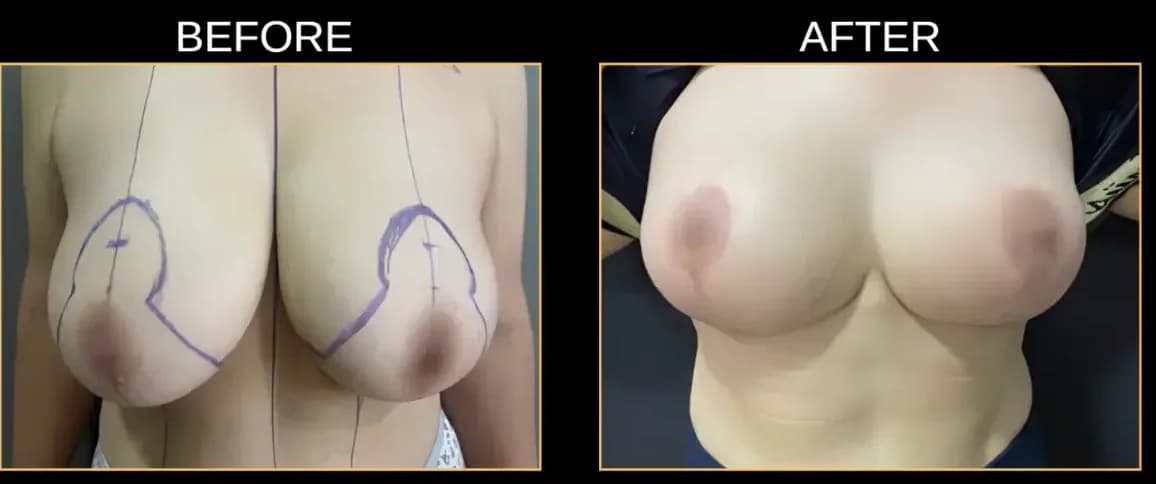
Breast Reduction Surgery Before and After: What Results Can You Expect?
Breast reduction surgery before and after photos can help patients understand how breast size, shape, and proportions may change following surgery.
Before surgery, women with excessively large breasts may experience:
Heavy and enlarged breasts.
Downward-pointing nipples.
Excessive breast skin.
Shoulder grooves.
Difficulty finding comfortable bras.
Discomfort during physical activities.
After surgery, the breasts may appear:
Smaller and lighter.
More proportionate to the body.
Better positioned.
More balanced in shape.
Easier to support with suitable clothing.
However, breast reduction surgery before and after results are not identical for every patient.
Final results depend on the amount of tissue removed, skin elasticity, surgical technique, healing, and individual anatomy.
When Can You See Final Results?
Immediately after surgery, swelling and bruising can affect the appearance of the breasts.
As healing progresses, swelling gradually reduces and the breasts begin to settle into their new shape.
The final appearance may continue to develop over several months.
What Should You Check in Breast Reduction Surgery Pics?
When reviewing breast reduction surgery pics, consider:
Whether the patient's original breast size is similar to yours.
Whether the reduction looks proportionate to the patient's body.
How the nipple position has changed.
Whether the breast shape looks natural.
How scars appear in healed photographs.
Whether the photos represent genuine patients and documented outcomes.
Before-and-after photographs should be viewed as examples rather than guaranteed results.
Always review authentic, consented patient photographs provided by the treating clinic.
Breast Reduction Surgery Cost in India
The breast reduction surgery price in India depends on several factors, including the surgeon's experience, hospital facilities, surgical technique, anaesthesia, and the amount of breast tissue that needs to be removed.
As an indicative planning range, published Indian healthcare listings report prices starting at approximately ₹90,000, with some estimates reaching ₹2,00,000 or more. Actual quotations vary by provider, city, and treatment requirements.
Breast Reduction Surgery Cost in Delhi
The breast reduction surgery cost in Delhi also varies depending on the hospital, surgeon, complexity of the procedure, and services included in the treatment package.
Some published Delhi estimates fall around ₹90,000–₹2,00,000. This should not be treated as a fixed price or a confirmed quotation.
Factors Affecting Breast Reduction Surgery Price in India
1. Surgeon's Experience
The surgeon's qualifications, experience, and expertise in breast surgery can influence the overall treatment cost.
2. Hospital Facilities
Hospital infrastructure, operation theatre facilities, nursing support, and patient monitoring may affect the total price.
3. Surgical Complexity
Patients requiring extensive tissue removal, significant reshaping, or additional procedures may have different treatment costs.
4. Anaesthesia Charges
The anaesthetist's professional fees and anaesthesia-related expenses are included in some packages and charged separately in others.
5. Medical Investigations
Preoperative investigations and breast imaging, when required, may contribute to the overall expenditure.
6. Postoperative Care
Medicines, supportive garments, follow-up consultations, and wound care should also be considered.
What Is Included in the Surgery Package?
Before selecting a clinic, ask whether the quotation includes:
Surgeon fees.
Anaesthesia charges.
Hospital and operation theatre charges.
Preoperative investigations.
Medicines and dressings.
Supportive surgical bra.
Follow-up consultations.
Additional hospital stay, if required.
For an accurate breast reduction surgery cost near me, consult a qualified plastic surgeon and request an individualised treatment estimate.
Breast Reduction Surgery Recovery Time
Breast reduction surgery recovery time varies depending on the surgical technique, amount of tissue removed, and the patient's healing response.
Most patients experience swelling, bruising, tenderness, and temporary discomfort during the initial recovery period.
First 24–48 Hours
Patients are monitored after surgery. Some may experience soreness, swelling, and tightness around the breasts.
Pain medication and wound-care instructions are provided according to the surgeon's recommendations.
First Week
Swelling and bruising may continue. Patients should rest, avoid strenuous activity, and follow instructions regarding dressings and supportive garments.
Second Week
Many patients gradually resume light daily activities, depending on their recovery and medical advice.
Weeks 3–4
Discomfort generally improves, and patients may gradually return to more routine activities.
Heavy lifting and strenuous exercise should still be avoided until cleared by the surgeon.
Weeks 5–6
Some patients can progressively resume more physical activities after medical approval.
After 2–3 Months
Swelling continues to settle, and breast shape becomes more defined.
Scars also begin their gradual maturation process, although they may take considerably longer to fade.
Remember: These are general recovery milestones, not a guaranteed timeline. Follow your surgeon's individual instructions.
How to Recover Faster After Reduction Mammoplasty
Good postoperative care is essential for proper wound healing and recovery.
Consider the following recommendations:
Wear the prescribed surgical support bra.
Keep surgical wounds clean and follow dressing instructions.
Take prescribed medicines as directed.
Avoid heavy lifting and strenuous exercise.
Avoid smoking and nicotine products.
Attend scheduled follow-up appointments.
Maintain a balanced and nutritious diet.
Sleep in the position recommended by your surgeon.
Avoid driving while taking sedating medication or experiencing discomfort that affects safe driving.
Contact your medical team promptly if you experience fever, worsening pain, unusual swelling, spreading redness, wound discharge, or unexpected changes in breast or nipple colour.
Seek urgent medical attention for chest pain, sudden breathlessness, or other severe symptoms.
Risks and Possible Complications of Breast Reduction Surgery
Like every major surgical procedure, breast reduction surgery has potential risks and complications.
These may include:
Bleeding or haematoma.
Infection.
Delayed wound healing.
Permanent surgical scars.
Changes in nipple or breast sensation.
Breast asymmetry.
Changes in breast shape.
Fluid accumulation.
Anaesthesia-related complications.
Blood clots.
Difficulty or inability to breastfeed.
Partial or complete loss of nipple or skin tissue in rare cases.
The possibility of complications depends on individual health, surgical complexity, and postoperative care.
A qualified plastic surgeon should explain the benefits, limitations, and risks before you provide informed consent.
How to Choose the Right Breast Reduction Surgeon in India
Choosing an appropriately qualified surgeon is one of the most important decisions when considering breast reduction surgery in India.
Before proceeding, consider the following:
Verify the surgeon's recognised qualifications and plastic surgery training.
Ask about their experience with breast reduction procedures.
Review genuine before-and-after photographs.
Understand the proposed surgical technique.
Discuss scarring, nipple sensation, and breastfeeding implications.
Confirm the hospital's surgical and emergency facilities.
Understand the complete treatment quotation.
Check the postoperative follow-up arrangements.
Do not choose a surgeon based only on advertisements, discounts, or the lowest quoted price.
A detailed consultation helps establish whether the procedure is appropriate for your health and expectations.
Frequently Asked Questions About Breast Reduction Surgery
1. What is a breast reduction?
Breast reduction is a surgical procedure that removes excess breast fat, glandular tissue, and skin to reduce breast size and weight. It also reshapes the breasts to improve their proportions.
2. What is breast reduction surgery called medically?
Breast reduction surgery is medically known as reduction mammoplasty. It is performed to reduce breast volume and reshape the remaining breast tissue.
3. How much does breast reduction surgery cost in India?
Breast reduction surgery in India may cost approximately ₹90,000–₹2,00,000 or more, depending on the surgeon, hospital, surgical complexity, and treatment requirements. An individual consultation is necessary for an accurate estimate.
4. What is the breast reduction surgery cost in Delhi?
The breast reduction surgery cost in Delhi varies between clinics and hospitals. Published estimates commonly fall within approximately ₹90,000–₹2,00,000, although actual prices may differ.
5. Is breast reduction surgery painful?
The operation is generally performed under general anaesthesia, so patients do not experience surgical pain during the procedure. Some pain, tightness, and tenderness may occur during recovery and can be managed with prescribed medication.
6. How long does breast reduction surgery take?
Breast reduction surgery commonly takes around 2–3 hours. The exact duration depends on breast size, surgical technique, and the complexity of the procedure.
7. How long is the recovery time after breast reduction surgery?
Initial recovery commonly takes around 2–6 weeks. However, swelling, scars, and breast shape may continue to improve over several months.
8. Can breast reduction surgery reduce back pain?
Breast reduction may help relieve back, neck, and shoulder discomfort associated with excessively large breasts. The degree of improvement varies between patients.
9. Will breast reduction surgery leave scars?
Yes. Breast reduction surgery involves incisions and leaves permanent scars. Their location and appearance depend on the surgical technique, healing, and individual skin characteristics. Scars generally become less noticeable over time.
10. Can I breastfeed after breast reduction surgery?
Breastfeeding may still be possible after breast reduction, but the procedure can affect milk production and breastfeeding ability. The outcome depends on the surgical technique and preservation of milk ducts and nerves.
11. Will my breast size increase again after surgery?
Breast size may change due to pregnancy, hormonal changes, ageing, and significant weight fluctuations. Maintaining a stable weight may help preserve surgical results.
12. What is the best age for breast reduction surgery?
There is no single ideal age for every patient. Generally, surgeons prefer breast development to be complete before elective reduction surgery. Individual medical suitability should be assessed during consultation.
13. Can very large breasts be reduced significantly?
Yes, selected patients with extremely large breasts may undergo substantial breast reduction. The amount of tissue removed depends on anatomy, blood supply, nipple preservation, and overall surgical safety.
14. When can I return to the gym after breast reduction surgery?
Strenuous exercise and heavy lifting are generally restricted for several weeks. Many patients gradually resume exercise around 6 weeks or later, depending on healing and the surgeon's approval.
15. How can I find breast reduction surgery near me?
Search for a qualified plastic surgeon or an established hospital offering breast reduction surgery in your area. Review qualifications, surgical experience, patient results, hospital facilities, and follow-up care before making a decision.
Conclusion: Consider Breast Reduction Surgery for Better Comfort and Proportions
Breast reduction surgery in India can be an option for women experiencing physical discomfort, lifestyle limitations, or concerns related to excessively large breasts.
The procedure removes excess breast tissue, fat, and skin while reshaping the remaining breast to achieve a smaller and more proportionate appearance.
Understanding the breast reduction procedure, recovery time, possible complications, before-and-after results, and surgery cost is essential before making a decision.
The most important step is to consult a qualified plastic surgeon who can assess your individual needs, explain suitable surgical techniques, and develop a personalised treatment plan.