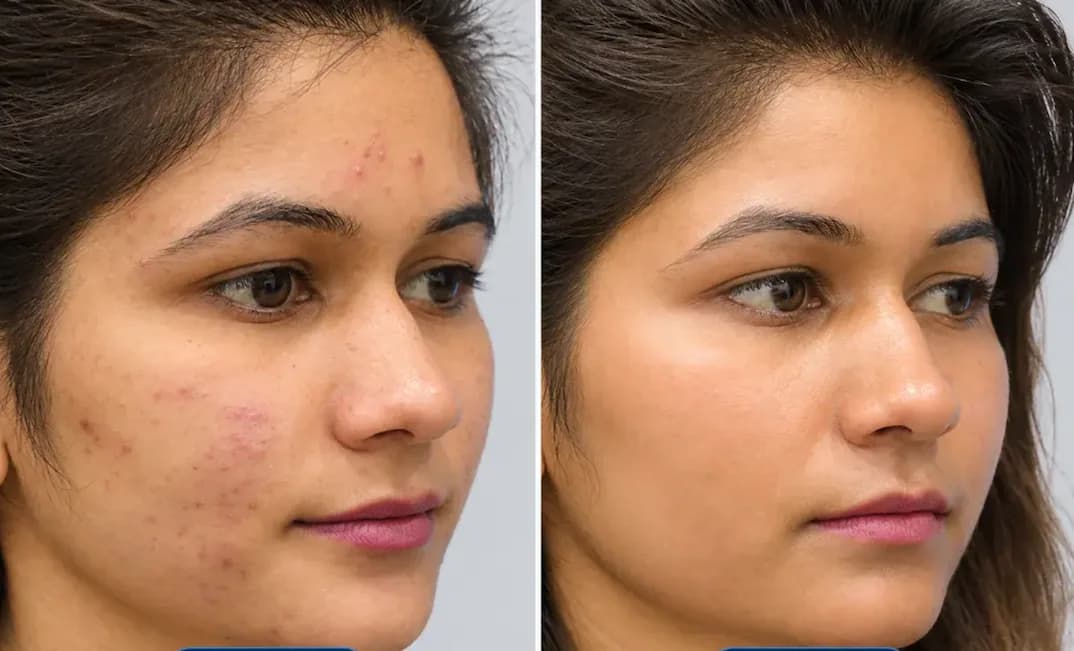
Acne scars can affect more than just your skin's appearance. They can impact your confidence, self-esteem and comfort in social situations. Whether you have deep acne scars, rolling scars, boxcar scars, ice-pick scars or dark marks left behind by pimples, choosing the right acne scar treatment in Delhi can help improve your skin texture and overall appearance. With advancements in dermatology and aesthetic medicine, several effective options are now available for acne scar removal. Modern treatments such as laser resurfacing, microneedling, radiofrequency microneedling, chemical peels, subcision and TCA CROSS can help reduce the appearance of different types of acne scars. If you are searching for the best acne scar treatment, understanding your scar type, skin condition and treatment options is the first step towards healthier-looking skin. In this comprehensive guide, we will explore the causes of acne scars, advanced treatment options, acne scar treatment before and after results, recovery time, expected improvements and how to choose the right acne scar treatment in Delhi. Acne scar treatment refers to dermatological procedures designed to improve the appearance of scars that develop after acne breakouts. Acne scars usually occur when inflammation damages the deeper layers of the skin and affects its natural healing process. When the skin produces insufficient collagen during healing, depressed or indented scars may develop. In some cases, excessive collagen production can result in raised scars. Modern skin treatment for acne scars focuses on improving skin texture, stimulating collagen production, reducing scar depth and creating a smoother-looking complexion. Depending on the type and severity of the scars, a dermatologist may recommend one treatment or a combination of procedures. The main goals of acne scar removal treatment include: Reducing the appearance of deep and superficial acne scars. Improving uneven skin texture. Stimulating natural collagen production. Minimising enlarged pores associated with acne. Improving overall skin tone and smoothness. Reducing post-acne marks and pigmentation. It is important to understand that complete scar removal is not always possible. However, appropriate treatment can significantly improve the appearance of many acne scars. Acne scars generally develop when inflamed acne lesions damage the skin's deeper tissues. The body's natural healing response produces collagen to repair the damaged area. If too little collagen is produced, depressed scars may appear. If too much collagen develops, raised scars can form. Several factors can increase the likelihood of developing acne scars: Deep cystic acne and inflammatory pimples can damage the skin's deeper layers, increasing the risk of permanent scarring. Frequently squeezing, scratching or picking pimples can worsen inflammation and increase the possibility of scarring. Leaving moderate or severe acne untreated for an extended period can increase the risk of permanent scars. Some individuals are naturally more prone to developing acne scars because of their skin type and healing response. Using unsuitable skincare products or irritating the skin with harsh treatments can worsen inflammation and pigmentation. Early acne management and appropriate dermatological care can help reduce the chances of developing new scars. Choosing the right treatment for acne scars on face depends on understanding the type of scars present. Different acne scars respond to different dermatological procedures. Ice pick scars are narrow, deep indentations that extend into the deeper layers of the skin. They often appear as small holes on the cheeks and other acne-prone areas. Recommended treatments may include: TCA CROSS. Selected laser treatments. Combination scar-remodelling procedures. Boxcar scars are broad, depressed scars with clearly defined edges. They can be shallow or deep and are commonly found on the cheeks. Recommended treatments may include: Fractional laser resurfacing. Microneedling. Radiofrequency microneedling. Subcision in selected cases. Rolling scars create an uneven, wavy appearance on the skin. They are often caused by fibrous bands that pull the skin downward. Recommended treatments may include: Subcision. Radiofrequency microneedling. Fractional laser resurfacing. Combination treatments. Hypertrophic scars are raised scars caused by excessive collagen production during the healing process. Recommended treatments may include: Intralesional injections. Silicone-based scar management. Selected laser procedures. Dark marks left behind after pimples are often pigmentation rather than true depressed scars. Recommended treatments may include: Chemical peels. Dermatologist-prescribed topical treatments. Selected laser treatments. Sun protection and pigmentation management. Identifying the correct scar type is essential because pigmentation, raised scars and depressed scars require different treatment approaches. There is no single procedure that works equally well for every individual. The best acne scar treatment depends on the depth, type and location of scars, skin tone, medical history and treatment expectations. Here are some commonly used advanced procedures for acne scar improvement. Fractional laser treatment is a popular option for improving uneven skin texture and certain types of depressed acne scars. The laser delivers controlled energy into targeted areas of the skin, stimulating collagen remodelling and supporting the skin's natural repair process. Benefits: Improves uneven skin texture. Helps reduce the appearance of selected acne scars. Stimulates collagen production. Can improve overall skin smoothness. Targets damaged areas while leaving surrounding skin relatively untreated. The number of sessions depends on scar severity and the type of laser used. Microneedling is a minimally invasive procedure that uses fine, sterile needles to create controlled micro-injuries in the skin. These micro-injuries stimulate the body's natural wound-healing response and encourage collagen and elastin production. Benefits: Helps improve shallow acne scars. Supports collagen production. Improves uneven skin texture. Can minimise the appearance of enlarged pores. Offers gradual skin improvement. Microneedling may be suitable for certain rolling and shallow boxcar scars. Radiofrequency microneedling combines microneedling with controlled radiofrequency energy. The device delivers energy into selected skin layers to stimulate collagen remodelling and improve skin texture. Benefits: Helps improve selected acne scars. Supports deeper collagen remodelling. Improves skin texture. May help reduce the appearance of enlarged pores. Can be customized according to skin condition. It may be considered for individuals with different types of depressed acne scars after a dermatologist's assessment. Subcision is a specialised procedure commonly used for rolling acne scars. During the procedure, a dermatologist uses a specialised needle or instrument beneath the skin to release fibrous bands that pull the scarred area downward. Benefits: Targets tethered rolling scars. Helps release underlying fibrous tissue. Improves depressed scar appearance. Can be combined with other scar treatments. Subcision is particularly useful when acne scars are attached to deeper tissues. TCA CROSS stands for Trichloroacetic Acid Chemical Reconstruction of Skin Scars. It is a specialised technique in which a dermatologist applies a controlled concentration of trichloroacetic acid to individual acne scars. It is frequently considered for narrow, deep ice-pick scars. Benefits: Targets individual deep scars. Stimulates local collagen production. Helps improve selected ice-pick scars. Can be combined with other procedures. The treatment requires professional application because improper use of strong acids can cause burns, pigmentation or additional scarring. Chemical peels involve applying a controlled chemical solution to the skin to exfoliate damaged surface layers. Depending on the formulation and concentration, chemical peels may help improve post-acne pigmentation, superficial marks and certain textural concerns. Benefits: Helps reduce superficial pigmentation. Improves skin texture. Supports skin renewal. Can improve post-acne marks. Helps create a brighter-looking complexion. Chemical peels are generally more useful for superficial marks than deep, indented acne scars. Certain depressed acne scars may benefit from carefully selected dermal fillers. Fillers are injected beneath specific depressed areas to provide temporary volume and improve their appearance. Benefits: Can improve selected depressed scars. Provides immediate volume correction. May be considered for certain rolling scars. Can complement other scar-remodelling procedures. Results vary depending on the filler, technique and individual skin condition. Choosing an appropriate acne scar removal treatment requires an individual assessment. Acne scar type Possible treatment options Ice pick scars TCA CROSS, selected laser treatments Boxcar scars Fractional laser, microneedling Rolling scars Subcision, RF microneedling Shallow acne scars Microneedling, fractional laser Dark acne marks Chemical peels, topical treatments Raised acne scars Intralesional injections, selected laser procedures A combination of treatments may provide better improvement than a single procedure for individuals with multiple scar types. A dermatologist will recommend the most appropriate approach after examining your skin. One of the most common questions people ask before starting treatment is what their skin will look like after the procedure. Acne scar treatment before and after results can vary depending on the type of acne scars, treatment method, skin condition and individual healing response. Before treatment, individuals may experience: Deep or shallow indentations. Uneven skin texture. Visible acne scars on the cheeks and forehead. Enlarged pores. Dark marks left behind by previous breakouts. Uneven skin appearance. After a suitable course of treatment, improvements may include: Reduced visibility of selected acne scars. Smoother-looking skin texture. Improved appearance of depressed scars. More even-looking skin tone. Reduced appearance of certain enlarged pores. Improved overall skin appearance. Results are not always immediate. Procedures that stimulate collagen production generally require time for the skin to remodel. Some people may notice early changes within a few weeks, while more noticeable improvements can take several months. Multiple sessions may be necessary depending on the treatment selected. It is important to compare genuine, consistently photographed before-and-after images taken under similar lighting and angles. Results should never be presented as guaranteed or identical for every patient. If you are looking for acne scar treatment in Delhi, choosing a clinic that offers personalised dermatological assessment is important. Different acne scars require different procedures, and an unsuitable treatment may lead to irritation, pigmentation or unsatisfactory results. At the Youngness Center, individuals seeking acne scar improvement can explore treatment options based on their skin condition and aesthetic goals. Important factors to consider when choosing a clinic include: A proper skin evaluation helps identify the type, depth and severity of acne scars. Your treatment plan should be based on your skin condition rather than a one-size-fits-all procedure. A clinic should offer suitable dermatological options for different types of acne scars. Professional procedures should be performed using appropriate sterilisation practices and clinical safety protocols. Post-treatment guidance and follow-up assessments help monitor healing and treatment progress. If you are considering acne scar removal near me, prioritise a qualified dermatologist and an appropriate treatment plan rather than choosing a procedure based only on its advertised results. If you are wondering how to reduce pimple scars, following a suitable skincare routine and managing active acne are important steps. Although skincare products cannot usually remove deep, established acne scars, they can help improve pigmentation and support overall skin health. Consider the following practices: UV exposure can worsen post-acne pigmentation. Use a broad-spectrum SPF 30 or higher sunscreen and reapply as recommended. Picking and squeezing acne lesions can increase inflammation and the risk of permanent scarring. Ingredients such as retinoids, azelaic acid and other suitable topical products may help manage acne and pigmentation. Their use should be guided by skin type and tolerance. A suitable moisturiser supports the skin barrier and reduces dryness caused by certain acne treatments. Managing active breakouts can help prevent the formation of additional scars. Lemon juice, baking soda and abrasive scrubs can irritate the skin and worsen pigmentation. Remember that established deep scars generally require professional procedures rather than skincare products alone. Effective acne and acne scar treatment should address both active acne and existing scars. Treating scars without controlling ongoing acne may increase the likelihood of developing new scars. A dermatologist may divide treatment into two stages. Stage 1: Active Acne Management Identify the underlying acne type. Control inflammatory breakouts. Recommend suitable topical or oral medication when necessary. Establish a consistent skincare routine. Reduce the risk of new scars. Stage 2: Acne Scar Improvement Identify different scar types. Select suitable laser or collagen-stimulating procedures. Consider subcision or TCA CROSS for appropriate scars. Monitor skin healing. Adjust the treatment plan according to progress. A combined approach to acne and scar treatment helps address the underlying acne problem while improving existing skin damage. The cost of acne scar treatment depends on several factors, including the treatment method, scar severity, number of sessions, technology used and clinic assessment. For example, the cost of chemical peels may differ significantly from fractional laser, RF microneedling, subcision or combination procedures. Factors affecting the overall cost include: Type and depth of acne scars. Size of the treatment area. Number of sessions required. Technology and procedure selected. Individual skin condition. Follow-up and aftercare requirements. For an accurate estimate, consult a dermatologist who can assess your skin and recommend a personalised treatment plan. Avoid choosing a procedure based only on its price. Treatment suitability, clinical expertise and safety should remain the priority. Finding the best treatment for deep acne scars can be challenging because deeper scars often involve changes in the underlying skin structure. Superficial skincare treatments generally cannot correct deep indentations. Depending on the scar type, dermatologists may consider: Subcision: For rolling scars attached to underlying fibrous bands. TCA CROSS: For selected deep ice-pick scars. Fractional laser: For improving certain types of depressed scars and skin texture. RF microneedling: For collagen remodelling and selected atrophic scars. Combination treatment: For individuals with different types of deep acne scars. The most effective approach is determined after a detailed skin assessment. Although the exact process depends on the selected procedure, most professional acne scar treatments follow a few general steps. The dermatologist examines your skin, identifies scar types and discusses your treatment goals. The treatment area is cleansed. Depending on the procedure, topical numbing cream may be applied. The selected procedure is performed using appropriate equipment and techniques. The dermatologist provides instructions regarding skincare, sun protection and recovery. Your skin is evaluated to monitor healing and determine whether additional sessions are needed. Recovery time depends on the treatment method and individual skin response. Some procedures involve minimal downtime, while deeper laser treatments or combination procedures may require a longer recovery period. General aftercare recommendations may include: Avoid direct sun exposure. Use dermatologist-recommended sunscreen. Avoid harsh exfoliating products during recovery. Keep the treated area clean. Use recommended moisturisers. Avoid picking, scratching or rubbing the skin. Follow all post-treatment instructions. Temporary redness, swelling, sensitivity or peeling may occur depending on the procedure. Contact your treating dermatologist if you experience severe pain, worsening swelling, signs of infection or an unexpected reaction. The best acne scar treatment depends on the type and severity of scars. Fractional laser, RF microneedling, subcision, microneedling and TCA CROSS are among the options used by dermatologists. Some acne scars can be significantly improved with professional treatments, but complete removal cannot be guaranteed. Results depend on scar depth, type and individual healing response. The number of sessions varies according to scar severity and treatment type. Some individuals need multiple sessions or a combination of procedures to achieve noticeable improvement. Discomfort varies by procedure. Topical numbing creams or other appropriate pain-management methods may be used to improve comfort during treatment. Subcision, TCA CROSS, fractional laser and RF microneedling may be considered for deep acne scars. The choice depends on whether the scars are ice-pick, boxcar or rolling scars. Laser treatments can improve the appearance of selected acne scars by stimulating collagen remodelling and improving skin texture. Multiple sessions may be required, and complete scar removal is not guaranteed. Some early improvements may become visible within a few weeks. Collagen-stimulating procedures can take several months to show their full results. Mild post-acne marks may gradually improve with time, sunscreen and suitable skincare. However, deep or permanent indented scars generally require professional dermatological procedures. Many acne scar procedures can be adapted for different skin types. However, treatment selection is especially important for darker skin tones because some procedures can increase the risk of post-inflammatory hyperpigmentation. If you are searching for acne scar removal near me, look for a reputable dermatology or aesthetic clinic with qualified professionals, suitable treatment options and personalised consultations. Treated scars do not generally return in exactly the same way, but new acne breakouts can create additional scars. Controlling active acne is therefore important. Acne marks are usually flat areas of pigmentation or redness left after breakouts. Acne scars involve changes in skin structure, such as depressions or raised areas. Both require different treatment approaches. Acne scars do not have to define your skin's appearance. With modern dermatological procedures and personalised treatment planning, it is possible to improve uneven skin texture, reduce the appearance of depressed scars and achieve healthier-looking skin. Whether you are dealing with deep acne scars, rolling scars, boxcar scars, ice-pick scars or pigmentation left behind by pimples, the first step is identifying the right treatment for your skin.What Is Acne Scar Treatment?
What Causes Acne Scars?
1. Severe Inflammatory Acne
2. Picking or Squeezing Pimples
3. Delayed Acne Treatment
4. Genetic Factors
5. Improper Skincare
Types of Acne Scars: Identify Your Scar Before Treatment
1. Ice Pick Scars
2. Boxcar Scars
3. Rolling Scars
4. Hypertrophic Scars
5. Post-Acne Dark Marks
Best Acne Scar Treatment: Advanced Dermatological Procedures
1. Fractional Laser Treatment
2. Microneedling Treatment
3. RF Microneedling
4. Subcision Treatment
5. TCA CROSS Treatment
6. Chemical Peels
7. Dermal Fillers for Selected Acne Scars
Acne Scar Removal Treatment: Which Procedure Is Right for You?
Acne Scar Treatment Before and After: What Results Can You Expect?
How Long Does It Take to See Results?
Acne Scar Treatment in Delhi: Why Choose Professional Dermatological Care?
1. Professional Skin Assessment
2. Personalised Treatment Planning
3. Advanced Treatment Options
4. Hygiene and Safety
5. Follow-Up Care
How to Reduce Pimple Scars: Tips for Healthier-Looking Skin
1. Use Sunscreen Daily
2. Avoid Picking Pimples
3. Follow a Dermatologist-Recommended Routine
4. Keep Your Skin Moisturised
5. Treat Active Acne Early
6. Avoid Harsh Home Remedies
Acne and Acne Scar Treatment: Why Both Are Important
How Much Does Acne Scar Treatment Cost in Delhi?
Best Treatment for Deep Acne Scars: What Works?
What to Expect During an Acne Scar Treatment Session?
Step 1: Consultation
Step 2: Skin Preparation
Step 3: Treatment Procedure
Step 4: Post-Treatment Care
Step 5: Follow-Up
Recovery and Aftercare Following Acne Scar Removal
Frequently Asked Questions About Acne Scar Treatment
1. What is the best acne scar treatment?
2. Can acne scars be removed permanently?
3. How many sessions are required for acne scar removal?
4. Is acne scar removal treatment painful?
5. What is the best treatment for deep acne scars?
6. Does laser treatment remove acne scars?
7. How long does acne scar treatment take to show results?
8. Can pimple scars be treated naturally?
9. Is acne scar treatment suitable for all skin types?
10. Where can I find acne scar treatment near me?
11. Can acne scars return after treatment?
12. What is the difference between acne marks and acne scars?
Book Your Acne Scar Treatment Consultation at Youngness Center
Acne Scar Treatment in Delhi (2026): Best Acne Scar Removal Treatments, Before & After Results & Cost
Acne scars can affect your skin's appearance, texture and confidence. Whether you have deep acne scars, rolling scars, boxcar scars, ice-pick scars or dark marks left behind by pimples, choosing the right acne scar treatment in Delhi can help improve your skin texture and overall appearance.
23/11/2026 | Youngness Center Admin